Snake Removal & Trapping Services
Do you have a snake problem? Schedule a service with Varment Guard for professional snake removal and prevention services!
How to Get Rid of Snakes in Your Yard
Most snakes you’ll encounter are harmless and actually help keep rodent populations in check. That said, if snakes are showing up regularly around—or in—your home, there are smart steps you can take to make your property less inviting:
1. Cut Off Their Food Supply: If your yard has mice, voles, or shrews, snakes won't be far behind. Addressing rodent activity around your home is one of the most effective ways to reduce snake presence naturally.
2. Remove Hiding Spots: Keep your lawn mowed, trim back dense shrubs, and clear away any clutter near your foundation.
3. Consider Snake-Repelling Plants: Some homeowners have success planting marigolds, lemongrass, or wormwood along the perimeter of their yard.
4. Eliminate Moisture: Fix any drainage issues, repair leaks, and reduce moisture buildup around your foundation.
5. Seal Entry Points: Sealing foundational cracks, gaps around pipes, or openings near the garage removes the pathway snakes use to get inside.
6. Install a Physical Barrier: For persistent snake problems, installing a snake fence can be beneficial. It should be at least three feet tall and buried several inches underground.
7. Call the Professionals: If you're seeing snakes frequently, finding them inside your home, or you're simply not sure what you're dealing with, it's time to get in touch with Varment Guard.
Our Professional Snake Removal & Prevention Process
- Snake Exclusion: We caulk and seal structural or foundation gaps and screen crawl space vents.
-
Snake Trapping: We place sticky traps to capture snakes that have entered under dwellings, garages, warehouses, or along buildings. Scent attractant can be applied to the traps. Water-style traps are used in circumstances where water snakes are present.
- Once the snakes are caught, they are humanely removed from the sticky trap with the use of vegetable oil. They are then released back into a suitable habitat far away from your space.
- Snake Stick & Hand Capture: Varment Guard will remove snakes by hand or with a snake stick if it is found inside the structure and can be reached.
Our snake removal services typically cost between $130 and $600 per visit, depending on whether the snake is venomous, where it's located, and whether structural exclusion work is needed.

What Kind of Pest Snakes Are There in the Midwest?
There are more than 3,400 species of snakes in the world. However, you don’t have to worry about most of those being a problem in your yard. However, it can still seem tough to know how to identify a snake in Ohio, Minnesota, or somewhere else in the Varment Guard service area.
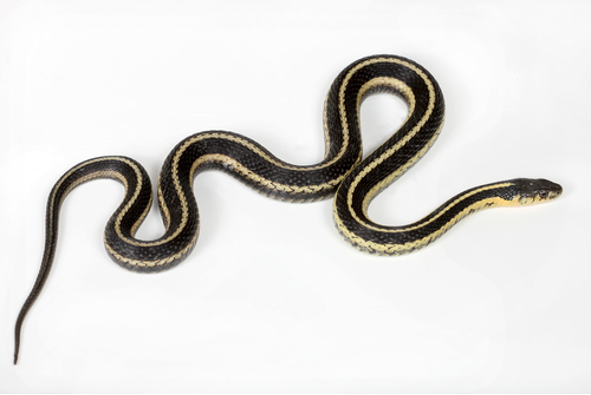
Garter & Ribbon Snakes
These snakes have a brown or black upper body background with 3 light olive green, yellow, red, or orange stripes and alternating black spots on stripes. Their underside is light green, white, or yellow.
The common garter snake is commonly found in yards by fields, woods and water in Ohio.
- Adult body length: 22 to 35 inches
- Eggs laid or young born alive: 3 to 96 young born alive per year
- Birthing season: June through September
- Activity period: Daytime
- Behavior / disposition: Mild to aggressive
- Primary diet: Earthworms, leeches, insects, fish, frogs, mice
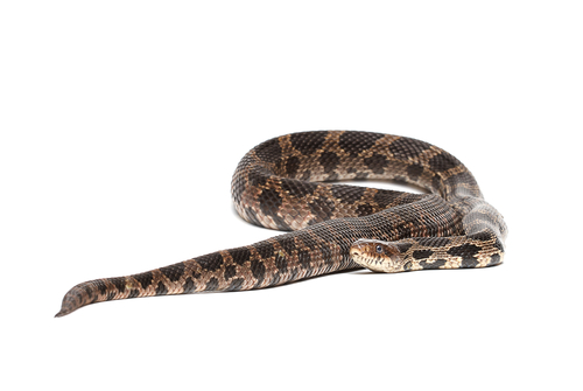
Corn, Rat, & Fox Snakes
The upper body background of these snakes are yellow, light brown, reddish-brown, gray, or black with red, brown, or black saddle-blotches or stripes. Their underside is white to yellow with dark patterning.
Black rat snakes are common in Ohio by woods, fields, and water.
- Adult body length: 48 to 72 inches
- Eggs laid or young born alive: 3 to 44 eggs laid June – August
- Birthing season: Hatchlings August through October
- Activity period: Night (pre-sunset to post-dawn)
- Behavior / disposition: Threatening; will bite; moderate in captivity
- Primary diet: Frogs, lizards, birds, bird eggs, small rodents, other small mammals
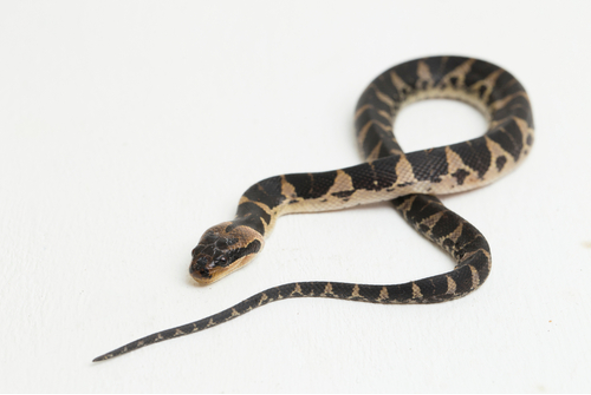
Water Snakes
With a brown, gray, or black upper body background, some water snake species also have alternating dorsal and side blotches. Their underside can be anywhere from white to yellow with variable markings.
The northern water snake is occasionally encountered near Lake Erie and other smaller lakes; it can be easily confused for the cottonmouth.
- Adult body length: 48 to 69 inches
- Eggs laid or young born alive: 7 to 58 young born alive per year
- Birthing season: June through October
- Activity period: Anytime (temperature-dependent)
- Behavior / disposition: Aggressive; will bite
- Primary diet: Fish, frogs, tadpoles, newts, mudpuppies, salamanders, crawfish and crabs
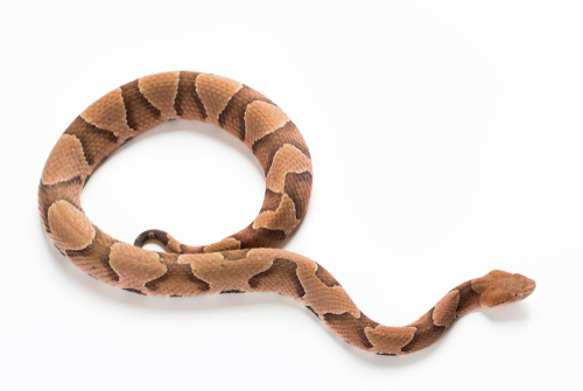
Copperhead
These snakes have a coppery-brown, reddish, or pink head, a light brown or pink body, and dark-outlined hourglass-shaped crossbands. Their underside is white with dark blotches.
Copperheads are found sparingly on rocky banks of rivers and creeks, especially in Ohio. When they’re nearby, a cucumber-like odor can be detected.
- Adult body length: 36+ inches
- Eggs laid or young born alive: 2 to 17 young born alive
- Birthing season: August through October
- Activity period: Daytime
- Behavior / disposition: Moderate to aggressive
- Primary diet: Amphibians, reptiles, small birds, rodents
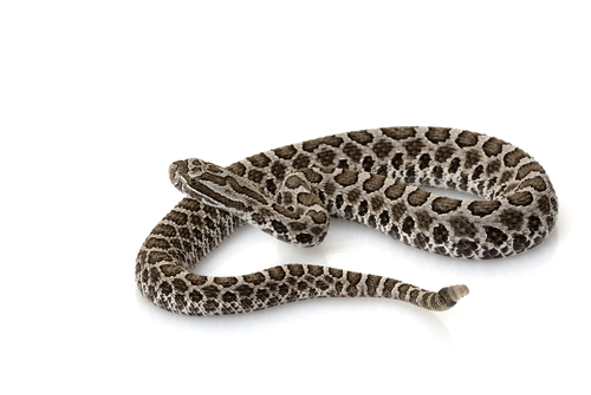
Massasauga Rattlesnake
These snakes have a brown to black background color with dark blotches along the back. Their underside is dark and heavily blotched.
Massasauga rattlesnakes are rare in Ohio and prefer edges of swamps, marshes, streams, ponds, meadows, fields, and fencerows.
- Adult body length: 24 to 30 inches
- Eggs laid or young born alive: 2 to 32 young born alive per year
- Birthing season: July through September
- Activity period: Daytime
- Behavior / disposition: Moderate
- Primary diet: Insects, frogs, lizards, small birds, mice
Not Sure What Snake You’re Dealing With Near Your Michigan, Minnesota, or Ohio Home?
Use Our Wildlife Identification Tool
If you’re not seeing the snake that’s been slithering around your property listed above, it’s time to bring in the experts. Use our wildlife identification form to find out exactly what type of snake has been spending time on your property.

Keep Snakes Away With Varment Guard
From garter snake removal in Ohio to water snake prevention in Michigan, Varment Guard can do it all quickly, efficiently, and humanely.

Frequently Asked Questions
What venomous snakes live in Ohio?
Most snakes you’ll see in Ohio yards are non-venomous. However, Ohio is home to three native venomous snakes: the copperhead, the timber rattlesnake, and the massasauga rattlesnake. Of these, copperheads are most commonly encountered on rocky riverbanks and wooded hillsides, while the massasauga and timber rattlesnake are rare and protected.
How much does professional snake removal cost?
Professional snake removal typically ranges from $130 to $600 per visit, depending on whether the snake is venomous, where it’s located, and whether structural exclusion work is needed. Emergency same-day snake removal usually costs more than scheduled visits. Varment Guard provides free estimates and an industry-leading 5-year guarantee on exclusion work. Give us a call!
Who do I call to get a snake out of my house?
For a snake inside your home, call a licensed wildlife control company like Varment Guard rather than a standard pest control or general pest extermination service. Wildlife technicians are trained to identify the species, safely capture the snake, and find the entry point.
How do I get rid of garter snakes humanely?
Garter snakes are non-venomous and ecologically beneficial, so humane removal is the preferred approach. Varment Guard uses live capture with sticky traps released using vegetable oil, hand capture by trained technicians, and exclusion work to seal gaps where they enter structures. We then place targeted repellent around the perimeter to discourage re-entry.
How do I keep snakes away from my home long-term?
Long-term snake prevention combines habitat modification (short grass, no wood or rock piles near the house, sealed foundation gaps) with rodent control (since snakes follow their food source). Varment Guard’s snake exclusion program inspects your property, identifies all entry points, installs permanent seals, and applies perimeter repellent.